

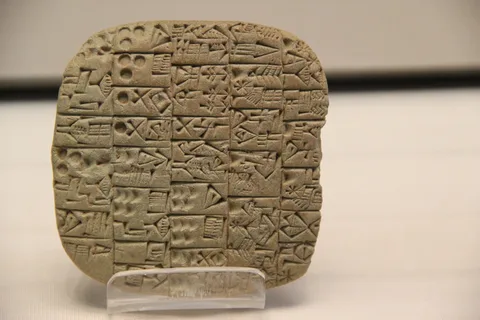
Thousands of years before paper, books, or digital archives, civilizations recorded their ideas on clay and stone. These ancient tablets preserved everything from royal decrees and business contracts to prayers, medical remedies, and myths. Many survived fires, floods, and the collapse of entire empires, quietly waiting beneath layers of earth until archaeologists brought them back into the light.
For centuries, these tablets appeared to be little more than objects covered in mysterious symbols. No one could read them, and many believed their stories had been lost forever. That changed as linguists, historians, and archaeologists gradually deciphered long-forgotten scripts, unlocking voices that had remained silent for millennia.
The results have transformed our understanding of the ancient world. Rather than revealing a civilization driven only by kings and wars, the tablets paint a far richer picture. They describe political rivalries, religious ceremonies, magical practices, family disputes, trade agreements, and surprisingly ordinary moments from everyday life. Together, they remind us that ancient societies were every bit as complex as our own.
What Are Ancient Tablets?
Ancient tablets are flat pieces of clay, stone, or other durable materials used for writing long before paper became common.
The best-known examples come from Mesopotamia, where scribes pressed wedge-shaped symbols into wet clay using a reed stylus. Once dried or baked, these tablets could survive for thousands of years, making them one of history’s most reliable records.
Materials used for ancient tablets
| Material | Common Use |
| Clay | Administrative records, literature, laws |
| Stone | Royal inscriptions and monuments |
| Wax-coated wood | Temporary writing and education |
| Metal | Ceremonial or official inscriptions |
Because clay was inexpensive and widely available, millions of tablets were created across ancient Mesopotamia.
The Mystery of Forgotten Languages
Finding an ancient tablet is only the beginning. Reading it is often the real challenge.
Many scripts disappeared as civilizations declined, leaving later generations unable to understand the symbols. For centuries, cuneiform inscriptions remained undeciphered despite being visible on monuments throughout the Middle East.
Patient comparison of repeated symbols, multilingual inscriptions, and historical context eventually allowed scholars to unlock these ancient languages.
Major writing systems found on tablets
- Cuneiform.
- Akkadian.
- Sumerian.
- Babylonian.
- Assyrian.
- Elamite.
- Hittite.
Each deciphered language opened an entirely new chapter of human history.
How Scholars Decoded Ancient Tablets
Deciphering an ancient script isn’t like translating a modern language.
Researchers first identify repeated patterns, compare symbols across different inscriptions, and study names of rulers or cities that appear in multiple languages. One bilingual or multilingual inscription can become the key to understanding thousands of others.
Progress often takes decades rather than years.
Steps in deciphering ancient writing
- Document every visible symbol.
- Compare recurring patterns.
- Identify proper names.
- Cross-reference historical records.
- Translate grammar and vocabulary.
- Verify interpretations through additional tablets.
Each successful translation helps scholars decode countless more texts.
Magic Was Part of Everyday Life
Modern readers often separate religion, medicine, and magic into different categories.
Ancient civilizations rarely did.
Many tablets contain spells, protective prayers, and ritual instructions intended to guard families from illness, bad luck, evil spirits, or unexplained disasters. These texts reflected the belief that unseen forces influenced daily life.
Common magical texts
| Type | Purpose |
| Protection spells | Guard homes and families |
| Healing rituals | Treat illness alongside medicine |
| Exorcism texts | Remove harmful spirits |
| Blessings | Seek divine favor |
| Amuletic inscriptions | Offer ongoing protection |
Magic wasn’t necessarily viewed as mysterious or forbidden. In many societies, it formed part of ordinary religious practice.
Politics Written in Clay
Not every tablet focused on religion.
Kings commissioned inscriptions celebrating military victories, construction projects, and diplomatic achievements. These texts helped strengthen royal authority while shaping how future generations would remember a ruler.
Some inscriptions sound remarkably similar to modern political messaging.
They highlighted successes, minimized failures, and presented rulers as chosen by the gods.
Information found in political tablets
- Royal decrees.
- Tax records.
- Military campaigns.
- Building projects.
- Diplomatic agreements.
- Laws and legal decisions.
These documents provide historians with detailed evidence of how ancient governments operated.
Rituals That Shaped Ancient Society
Rituals were woven into nearly every aspect of life.
Whether celebrating harvests, crowning kings, or honoring the dead, ceremonies followed carefully recorded instructions that were often preserved on tablets.
Priests relied on these texts to ensure rituals were performed correctly.
Purposes of ritual tablets
- Religious festivals.
- Temple ceremonies.
- Royal coronations.
- Agricultural celebrations.
- Funeral practices.
- Seasonal observances.
Many rituals reflected a desire to maintain harmony between humanity and the divine.
Were There Really “Dark Rituals”?
Popular culture often portrays ancient civilizations as obsessed with mysterious ceremonies and forbidden magic.
The evidence is more balanced.
Some tablets do describe curses, protective rituals against enemies, or ceremonies meant to drive away evil spirits. These practices certainly appear unusual today, but they were generally part of accepted religious beliefs rather than secret occult traditions.
Most surviving tablets focus on protection, healing, justice, or communication with the gods rather than sinister acts.
Curse Tablets: More Personal Than Mysterious
Among the most fascinating discoveries from the ancient world are curse tablets. Unlike royal inscriptions or temple records, these texts often reveal the private frustrations of ordinary people.
A merchant might ask the gods to punish someone who stole from him. An athlete could seek divine help before a competition. Others hoped to influence legal disputes or romantic relationships. These tablets show that people turned to supernatural forces when they felt powerless.
Common reasons people created curse tablets
- Settling personal disputes.
- Seeking justice after theft.
- Protecting property.
- Requesting success in court.
- Hoping for victory in competitions.
- Influencing relationships.
Rather than evidence of widespread “dark magic,” many curse tablets reflect everyday worries shared by people thousands of years ago.
Ancient Libraries Preserved Remarkable Knowledge
Some of history’s greatest archaeological discoveries have come from ancient libraries filled with clay tablets.
The most famous is the Library of Ashurbanipal in Nineveh, where thousands of tablets survived because fires baked the clay instead of destroying it. Ironically, the disaster that devastated the city helped preserve its written history.
These collections contain literature, astronomy, mathematics, law, medicine, and religious texts, offering an extraordinary glimpse into ancient scholarship.
Famous collections of ancient tablets
| Discovery | Why It Matters |
| Library of Ashurbanipal | Preserved thousands of cuneiform tablets |
| Ebla Tablets | Revealed an important Bronze Age kingdom |
| Amarna Letters | Diplomatic correspondence between ancient rulers |
| Hattusa Archives | Recorded Hittite laws, treaties, and rituals |
Together, these discoveries have transformed our understanding of the ancient Near East.
More Than Kings and Priests
One of the biggest surprises hidden in ancient tablets is how ordinary many of them are.
Not every inscription celebrates a military victory or describes a religious ceremony. Many record routine activities that feel surprisingly familiar today.
Historians have found shopping lists, receipts, loan agreements, school exercises, marriage contracts, and business transactions, proving that ancient writing was part of everyday life.
Everyday records found on tablets
- Tax payments.
- Employment records.
- Household inventories.
- Rental agreements.
- School lessons.
- Commercial contracts.
- Family inheritance documents.
These simple records often tell us more about daily life than grand monuments ever could.
What Ancient Medicine Looked Like
Medical tablets reveal that ancient healers combined practical treatments with spiritual beliefs.
Some texts describe herbs, bandages, and surgical procedures, while others include prayers or rituals intended to help patients recover. Rather than seeing science and religion as opposites, ancient societies often viewed them as complementary.
Common medical subjects
| Topic | Examples |
| Herbal remedies | Plant-based treatments |
| Diagnoses | Observed symptoms |
| Surgical care | Wound treatment |
| Protective prayers | Invocations for healing |
| Medical observations | Notes on recurring illnesses |
These tablets demonstrate that early medicine relied on careful observation as well as faith.
Why Ancient Tablets Still Matter
Clay tablets may be thousands of years old, but the questions they explore remain familiar.
People worried about health, family, careers, politics, justice, and the future just as they do today. Their words remind us that while technology has changed dramatically, many human concerns have stayed remarkably consistent.
Each translated tablet expands our understanding of civilizations that shaped writing, law, government, and literature.
Lessons these tablets continue to teach
- Writing preserves history.
- Governments have always relied on records.
- Religion influenced daily decisions.
- Trade connected distant cultures.
- Ordinary lives deserve historical attention.
- Knowledge can survive for thousands of years.
Ancient tablets are more than archaeological artifacts. They are conversations across time.
Frequently Asked Questions
1. What are ancient tablets made from?
Most ancient tablets were made from clay, though some were carved into stone or created using metal and wax-coated wood for specialized purposes.
2. What language appears on most Mesopotamian tablets?
Many Mesopotamian tablets use cuneiform writing to record languages such as Sumerian and Akkadian.
3. Did ancient tablets really contain magical spells?
Yes. Some tablets include protective spells, healing rituals, prayers, and exorcisms. These were often accepted parts of religious practice rather than secret or forbidden activities.
4. What is the most famous collection of ancient tablets?
The Library of Ashurbanipal in ancient Nineveh is one of the best-known collections, preserving thousands of clay tablets covering literature, science, law, and religion.
5. Why are archaeologists still studying ancient tablets?
New translations continue to reveal information about politics, trade, education, medicine, religion, and everyday life, helping historians build a more complete picture of ancient civilizations.
Conclusion:
Ancient tablets have transformed from undeciphered objects into some of the most valuable historical records ever discovered. They reveal societies shaped by powerful rulers, complex belief systems, thriving economies, and ordinary people navigating the challenges of everyday life. As more tablets are translated and new discoveries emerge, these remarkable artifacts continue to deepen our understanding of the ancient world and the civilizations that laid the foundations of human history.
Call to Action
If you’re fascinated by archaeology and ancient civilizations, keep exploring the discoveries being made by museums and researchers around the world. Every newly translated tablet has the potential to uncover another forgotten story, proving that history still has countless secrets waiting to be read.