

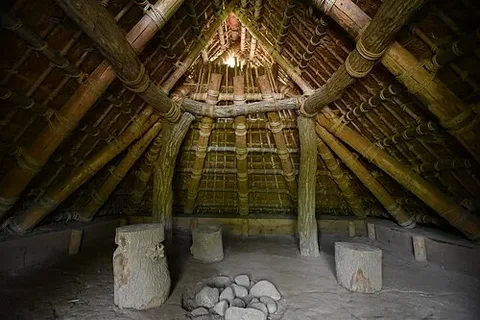
History is often written from pottery, tools, architecture, and ancient texts. For centuries, these sources helped scholars piece together Japan’s early past, explaining how communities lived, traded, and developed into one of the world’s most fascinating civilizations. While these discoveries painted a detailed picture, many important questions remained unanswered. Where did Japan’s earliest people come from? How were different cultures connected? And how much of today’s population can trace its ancestry back to those ancient communities?
The answers are increasingly coming from an unexpected source: DNA preserved inside ancient human remains. Thanks to advances in genetic sequencing, researchers can now study tiny fragments of ancient DNA that survived for thousands of years in bones and teeth. These discoveries are helping scientists compare ancient populations with modern ones, revealing migration patterns and relationships that archaeology alone could never fully explain.
Rather than replacing traditional history, ancient DNA is adding new layers to it. Archaeologists, geneticists, and historians now work together to build a clearer picture of Japan’s past, combining physical artifacts with biological evidence. The result is a richer understanding of how different peoples contributed to the formation of modern Japanese society.
Why Ancient DNA Matters
Ancient DNA, often called aDNA, refers to genetic material recovered from archaeological remains such as bones and teeth.
Unlike modern DNA studies, ancient DNA allows researchers to examine individuals who lived thousands of years ago. This makes it possible to compare ancient populations directly with people living today.
What ancient DNA can reveal
- Population movements.
- Family relationships.
- Genetic diversity.
- Health and disease.
- Dietary adaptations.
- Connections between ancient communities.
These insights help answer questions that written records simply cannot.
Japan’s Early History Before DNA Research
Before genetic evidence became available, scholars relied mainly on archaeology and historical documents.
Pottery styles, burial practices, farming techniques, and settlement patterns helped researchers understand cultural changes. While these methods remain essential, they often couldn’t determine whether new traditions resulted from migration or cultural exchange.
Traditional sources of evidence
| Source | What It Reveals |
| Pottery | Cultural traditions |
| Burial sites | Funeral customs |
| Stone tools | Daily life and technology |
| Ancient texts | Historical events |
| Settlement remains | Community organization |
DNA studies now complement these discoveries by adding biological evidence.
The Jomon People
One of the most important chapters in Japanese history begins with the Jomon people.
Living in the Japanese archipelago for thousands of years, the Jomon developed a hunter-gatherer lifestyle while producing some of the world’s earliest known pottery. Their beautifully decorated ceramic vessels gave the culture its name, which means “cord-marked.”
For many years, historians debated how closely modern Japanese people were related to these early inhabitants. Ancient DNA has provided valuable answers.
Characteristics of the Jomon culture
- Hunter-gatherer communities.
- Early pottery production.
- Fishing and coastal settlements.
- Rich artistic traditions.
- Regional cultural diversity.
Genetic studies indicate that the Jomon formed a distinct population that contributed to the ancestry of modern Japanese people, although they were not the only ancestral group.
The Arrival of the Yayoi People
Around 3,000 years ago, another major cultural shift began.
The Yayoi period introduced wet-rice agriculture, metalworking, and new technologies that transformed life across much of Japan. Archaeologists had long suspected that these changes were connected to migration from the Asian mainland.
Ancient DNA has strengthened that theory.
Researchers have found clear genetic evidence showing that populations arriving during the Yayoi period mixed with existing Jomon communities rather than completely replacing them.
Major Yayoi contributions
| Development | Impact |
| Rice farming | Stable food production |
| Iron tools | Improved agriculture |
| Bronze technology | New craftsmanship |
| Population growth | Larger settlements |
| Social organization | More complex communities |
This mixing of populations became one of the foundations of later Japanese society.
A New Three-Part Ancestry Model
Older theories often described modern Japanese ancestry using a two-population model involving the Jomon and Yayoi peoples.
Recent genetic research suggests the picture is more complex.
Many scientists now support a three-part ancestry model that includes a significant contribution from people associated with the Kofun period, when political power became increasingly centralized.
Proposed ancestral contributions
| Population | Contribution |
| Jomon | Indigenous ancestry |
| Yayoi | Agricultural migrants |
| Kofun | Later continental influence |
This model better explains the genetic diversity observed among modern Japanese populations.
The Kofun Period’s Growing Importance
The Kofun period, beginning around the third century CE, is famous for its enormous keyhole-shaped burial mounds.
For decades, archaeologists focused primarily on the political importance of this era. Ancient DNA now suggests it also played a major role in shaping Japan’s population.
Researchers believe additional migration from mainland East Asia during this period further influenced the developing Japanese state.
Features of the Kofun period
- Large burial mounds.
- Strong political leadership.
- Expanding international connections.
- Increased social hierarchy.
- Growing cultural exchange.
Instead of a single migration event, Japan’s history appears to involve multiple waves of movement and interaction over many centuries.
How Scientists Recover Ancient DNA
Recovering usable DNA from remains thousands of years old is an extraordinary scientific challenge.
Time, moisture, heat, and microorganisms gradually break genetic material down. Researchers therefore focus on the best-preserved skeletal elements, particularly teeth and dense bones.
Strict laboratory procedures are also necessary to prevent contamination from modern DNA.
Steps in ancient DNA research
- Carefully excavate archaeological remains.
- Select well-preserved samples.
- Remove surface contamination.
- Extract DNA in specialized clean laboratories.
- Sequence the genetic material.
- Compare results with ancient and modern populations.
Every successful sample adds another valuable piece to Japan’s historical puzzle.
DNA Supports Archaeology Rather Than Replacing It
Some people assume genetic research makes archaeology less important.
The opposite is true.
DNA answers biological questions, but it cannot explain beliefs, languages, traditions, politics, or cultural identity. Those answers still come from archaeology, anthropology, and historical research.
When combined, these fields create a far more complete understanding of Japan’s past than either could achieve alone.
What Ancient DNA Has Changed and What It Hasn’t
Headlines sometimes suggest that every new genetic study completely overturns history. In reality, science usually moves in smaller, evidence-based steps.
Ancient DNA has confirmed some long-held archaeological theories, challenged others, and filled important gaps. Rather than rewriting Japanese history from scratch, it has refined our understanding of how different populations interacted over thousands of years.
What DNA has helped clarify
- Multiple waves of migration reached Japan.
- The Jomon people contributed genetically to modern populations.
- Yayoi migrants mixed with existing communities.
- The Kofun period likely introduced another significant genetic influence.
- Population history is more complex than a simple replacement model.
The overall story has become richer, not completely different.
Regional Differences Across Japan
Japan’s population has never been genetically identical from one region to another.
Ancient DNA studies show that the influence of Jomon, Yayoi, and later populations varies across the archipelago. Geography, migration routes, and local history all played a role in shaping regional diversity.
This explains why researchers avoid making broad statements about a single “Japanese ancestry.”
Examples of regional variation
| Region | Historical Influence |
| Hokkaido | Stronger links to ancient northern populations, including the Ainu |
| Honshu | Mixture of Jomon, Yayoi, and Kofun ancestry |
| Kyushu | Early contact with migrants from the Korean Peninsula |
| Ryukyu Islands | Distinct genetic history with stronger Jomon-related ancestry |
These differences reflect centuries of migration and cultural exchange.
Ancient DNA and the Story of the Ainu and Ryukyuan Peoples
One of the most valuable contributions of genetic research has been a better understanding of Japan’s Indigenous communities.
Studies indicate that both the Ainu of northern Japan and the Ryukyuan people of Okinawa preserve higher proportions of Jomon-related ancestry than many populations on the Japanese mainland.
At the same time, each community has its own unique history shaped by migration, trade, and cultural development.
What researchers have learned
- The Ainu have deep historical roots connected to northern Japan.
- Ryukyuan populations followed their own historical path.
- Neither community can be explained by genetics alone.
- Culture, language, and history remain equally important.
DNA provides one part of the story, but it never replaces cultural identity.
The Limits of Ancient DNA Research
Genetic science is powerful, but it has limits.
Ancient remains are often damaged, and many archaeological sites cannot provide usable DNA. Researchers also work with relatively small sample sizes compared with the number of people who lived throughout Japan’s long history.
New discoveries can refine existing conclusions as additional evidence becomes available.
Challenges scientists face
- Poor DNA preservation.
- Limited archaeological samples.
- Risk of contamination.
- Ethical considerations.
- Gaps in the historical record.
For these reasons, scientists avoid drawing sweeping conclusions from a single discovery.
Why This Research Matters Today
Understanding population history isn’t just about satisfying curiosity.
Ancient DNA helps explain how societies developed, how cultures interacted, and how migration shaped civilizations over thousands of years. It also encourages collaboration between historians, archaeologists, linguists, and geneticists.
The result is a more balanced picture of Japan’s past, one built on multiple forms of evidence rather than a single discipline.
Lessons from ancient DNA research
- Human history is rarely simple.
- Migration has shaped civilizations throughout history.
- Different cultures often blended rather than replaced one another.
- Scientific discoveries continue to refine historical knowledge.
- Collaboration produces stronger historical interpretations.
These lessons extend far beyond Japan and apply to the study of ancient societies around the world.
What Future Discoveries Could Reveal
Ancient DNA research is still a rapidly developing field.
As sequencing technology improves, scientists may recover genetic material from older remains and from regions that have been difficult to study. Each new sample has the potential to answer long-standing questions or reveal unexpected connections.
Researchers also hope to combine genetics with climate studies, archaeology, and isotope analysis to create even more detailed reconstructions of ancient life.
Areas of ongoing research
| Research Focus | Goal |
| Earlier human migration | Understand the first settlers of Japan |
| Additional Jomon sites | Compare regional populations |
| Kofun burials | Study later migration patterns |
| Ancient diseases | Learn about historical health and immunity |
| Environmental change | Examine how climate influenced migration |
The story of Japan’s past is still unfolding with every new discovery.
Frequently Asked Questions
1. What is ancient DNA?
Ancient DNA is genetic material recovered from archaeological remains such as bones and teeth. It allows scientists to study people who lived thousands of years ago.
2. Who were the Jomon people?
The Jomon were Japan’s early hunter-gatherer communities, known for producing some of the world’s oldest pottery and living across the archipelago for thousands of years.
3. What was the Yayoi period?
The Yayoi period introduced rice farming, metalworking, and new technologies to Japan. Ancient DNA suggests migrants from mainland East Asia mixed with existing Jomon populations during this era.
4. Has DNA completely rewritten Japanese history?
No. Ancient DNA has refined and expanded historians’ understanding by confirming some theories, challenging others, and revealing a more complex picture of population history.
5. Why is ancient DNA important for archaeology?
It provides biological evidence that complements artifacts, historical records, and excavation findings, helping researchers build a more complete understanding of the past.
Conclusion:
Ancient DNA is offering an extraordinary new perspective on Japanese history, revealing that the story of the archipelago is one of migration, interaction, and cultural exchange rather than a single, straightforward origin. By combining genetics with archaeology, historians are uncovering a more detailed picture of the Jomon, Yayoi, and Kofun periods while showing that every new discovery adds another layer to an already fascinating history.
Call to Action
If you’re interested in archaeology, genetics, or East Asian history, follow the latest research from universities and scientific journals. Each new DNA study has the potential to answer questions that have puzzled historians for generations and reminds us that history is always growing as new evidence comes to light.